
Understanding Water Distillation and Why It Still Matters
Understanding Water Distillation and Why It Still Matters
Water distillation is one of the oldest and most reliable methods of water purification ever developed. Long before advanced membrane systems and modern filtration technologies existed, people were using heat and condensation to separate clean water from impurities. Even today, distillation remains an important treatment method in laboratories, industrial facilities, marine applications, healthcare environments, and specialized drinking water systems.
At its core, water distillation is a thermal separation process. Water is heated until it turns into vapor, and that vapor is then cooled back into liquid form. During this transformation, many contaminants are left behind because they cannot evaporate along with the water. The result is highly purified water with very low concentrations of dissolved solids, minerals, bacteria, and other unwanted compounds. ([wwdmag.com][1])
The process itself is remarkably similar to the natural hydrologic cycle that occurs on Earth every day. Water from oceans, lakes, and rivers evaporates into the atmosphere, leaving salts and contaminants behind. That vapor eventually condenses into clouds and returns as rain. Distillation essentially recreates this natural purification cycle inside a controlled system. ([H2O Labs][2])
In a typical distillation system, untreated water first enters a boiling chamber. Heat is applied until the water reaches its boiling point and begins producing steam. Most inorganic compounds, dissolved salts, heavy metals, sediment, and microorganisms do not convert into vapor and therefore remain inside the boiling vessel. The steam then moves into a cooling section known as a condenser, where it loses heat and transforms back into liquid water. The purified water is collected in a separate container for use. ([wwdmag.com][1])
From a water treatment standpoint, distillation is extremely effective against a broad range of contaminants. It can remove hardness minerals such as calcium and magnesium, dissolved metals including lead and iron, many biological organisms, nitrates, and suspended solids. Because the process involves boiling, it is also highly effective at destroying bacteria, viruses, and protozoa. ([Nebraska Extension Publications][3])
However, no water treatment technology is perfect, and distillation has limitations that engineers and operators must understand. Certain volatile organic compounds have boiling points close to or lower than water. Compounds such as benzene and some solvents may vaporize together with the steam and reenter the purified water stream after condensation. For this reason, many modern distillation systems incorporate activated carbon polishing filters after the condensation stage to capture residual volatile contaminants. ([wwdmag.com][1])
One of the biggest drawbacks of distillation is energy consumption. Heating water to its boiling point requires a substantial amount of thermal energy, especially when treating large volumes. Compared with technologies such as reverse osmosis, distillation systems are generally more energy intensive and slower. A small residential countertop distiller may require several hours to produce only one gallon of purified water. Industrial systems can scale production significantly, but they also require larger boilers, heat exchangers, and energy infrastructure. ([wwdmag.com][1])
Despite this disadvantage, distillation continues to play a critical role in applications where extremely pure water is required. Hospitals often use distilled water for sterilization equipment and respiratory devices. Laboratories rely on it for chemical testing where dissolved minerals could interfere with results. Marine vessels and offshore facilities use distillation and desalination systems to convert seawater into freshwater. In pharmaceutical manufacturing, distillation remains one of the preferred methods for producing highly purified process water. ([Wikipedia][4])
Distillation is also important in regions facing water scarcity. Seawater desalination plants frequently use thermal distillation technologies to produce drinking water for coastal populations. Multi stage flash distillation, for example, has historically been one of the major desalination methods used worldwide. In these systems, seawater passes through multiple chambers operating at different pressures, allowing rapid evaporation and condensation at lower temperatures. ([Wikipedia][5])
Another interesting aspect of distilled water is its chemical composition. Because distillation removes nearly all dissolved minerals, distilled water has very low total dissolved solids and low electrical conductivity. This makes it useful in applications where mineral scaling, corrosion, or conductivity must be minimized. Automotive cooling systems, steam irons, humidifiers, and certain industrial processes often benefit from low mineral water because it reduces deposits and equipment fouling. ([Wikipedia][4])
At the same time, the absence of minerals has sparked ongoing discussion about distilled water as a primary drinking source. Natural drinking water often contains calcium, magnesium, potassium, and trace minerals that contribute to taste and nutritional intake. Distilled water lacks most of these naturally occurring constituents. Many people describe the taste as flat because the dissolved minerals that normally provide flavor have been removed. ([Nebraska Extension Publications][3])
From a technical perspective, distilled water is not inherently dangerous to drink, but it is generally considered demineralized water rather than nutritionally balanced water. For most people consuming a normal diet, this is not a major concern. However, in long term applications, many experts prefer drinking water that contains at least moderate mineral content for improved taste and balanced composition. ([Wikipedia][4])
As water quality concerns continue to grow globally, distillation remains an important part of the broader water treatment landscape. While newer technologies such as reverse osmosis and advanced oxidation systems have gained popularity due to lower energy requirements and higher throughput, distillation still offers unmatched simplicity and reliability in certain applications. Its ability to produce exceptionally pure water from highly contaminated feed streams makes it valuable in both industrial and residential environments.
Ultimately, water distillation represents a fascinating intersection of chemistry, thermodynamics, and practical engineering. The process may be centuries old, but its relevance remains strong in a world where access to clean and dependable water is becoming increasingly important.
Article cited from the following sources:
[1]: What is Water Distillation?,
https://shorturl.at/31Itr
[2]: The Water Distillation Process: How Does It Work?
https://shorturl.at/3Ivg1
[3]: Drinking water treatment: distillation
https://extensionpubs.unl.edu/publication/g1493/na/html/view?
[4]: Distilled water
https://en.wikipedia.org/wiki/Distilled_water
[5]: Multi-stage flash distillation
https://en.wikipedia.org/wiki/Multi-stage_flash_distillation
Water Crisis in America
Water Crisis in America
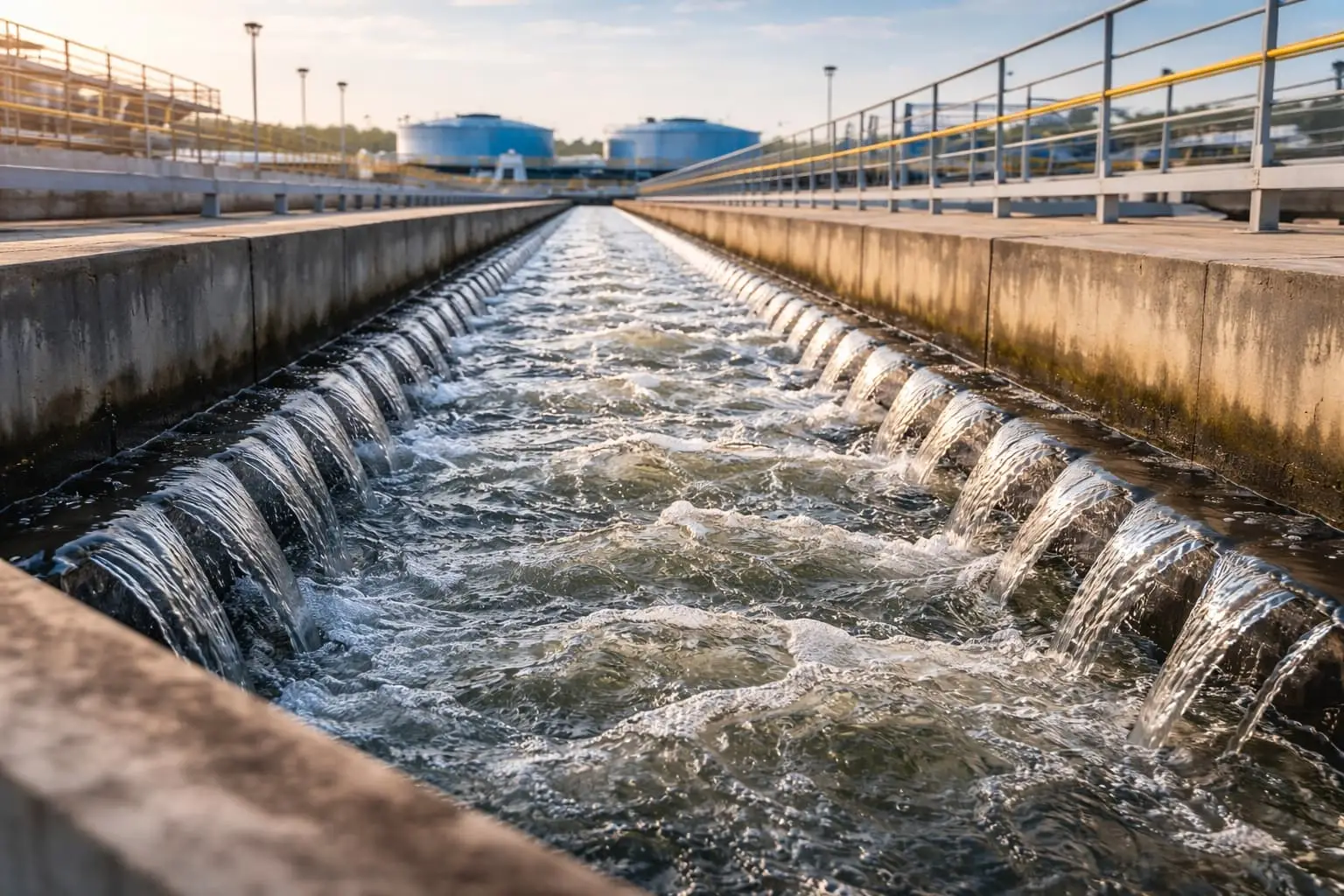
Although U.S. policymakers broadly acknowledge the need to modernize water infrastructure and adopt more intelligent water-management practices, a troubling gap remains between intent and implementation.
This disconnect is becoming more consequential as the U.S. manufacturing base expands through reshoring and increased digitalization. Manufacturing already represents the dominant source of water consumption in dozens of U.S. counties, and as industrial activity accelerates, demand on water systems will only grow. At the same time, much of the nation’s water infrastructure is aging beyond its design life, straining to keep pace with rising usage. Unsurprisingly, a majority of leaders now view water risk as the most significant infrastructure challenge ahead, with many agreeing that upgrades cannot be delayed.
Despite being the highest per-capita water user globally - averaging more than 1,800 gallons per person per day - the U.S. loses a substantial share of treated water before it ever reaches customers. Roughly one-fifth of daily water output is lost through deteriorating pipes, amounting to billions of gallons wasted every day. This systemic leakage contributes to an estimated quarter-million water main failures annually, imposing billions of dollars in lost utility revenue and repair costs on municipalities.
As Schneider Electric’s water and environment leadership has noted, water is far more than a public utility - it underpins industrial productivity, economic competitiveness, and urban resilience. Declining water availability and obsolete infrastructure now threaten those foundations. While managing water systems at scale is complex, automation, real-time monitoring, and smarter operational strategies offer a clear path forward - if leaders are willing to act.
A persistent execution gap
Research based on feedback from more than 200 U.S. decision-makers reveals a consistent pattern: awareness is high, but follow-through is weak. Most city governments and a majority of private-sector organizations report having defined water strategies. However, only a small subset actively execute those plans in a disciplined and ongoing manner. Budget limitations, day-to-day operational demands, and insufficient real-time system visibility are cited as primary obstacles. Cybersecurity risk further complicates decision-making, with a significant portion of leaders concerned about exposing critical infrastructure to digital threats.
The research also highlights a divergence in priorities. Municipal leaders tend to view water management as important but not urgent, while business leaders often deprioritize it altogether in favor of cost-reduction initiatives and investments tied to AI and broader digital transformation efforts.
Smart water technologies: proven value, slow adoption
Advanced digital tools - such as leak detection platforms and digital twin models - have already demonstrated measurable returns. Many organizations using these technologies report operating-cost reductions in the range of 5% to 10%. Still, adoption remains uneven. Financial constraints, perceived cyber exposure, and operational complexity continue to slow deployment. Public-sector leaders frequently point to capability and knowledge gaps, while private organizations struggle to balance water investments against competing strategic initiatives.
The takeaway is clear: the technology exists, the economic case is established, and the risks of inaction are rising. Closing the gap between strategy and execution will determine whether U.S. water systems become a constraint - or a competitive advantage - in the next phase of industrial and urban growth.
Article cited from: https://is.gd/UyQH85
Unlocking Earth's Hidden Hydrogen and Helium
Scientists Say "Hidden Hydrogen Could Power the World for 170,000 Years If We Can Extract It"
The article discusses a significant scientific advancement in the search for green energy: the potential of naturally occurring "hidden" hydrogen. A study by researchers from the University of Oxford, University of Durham, and University of Toronto, published in Nature Reviews Earth & Environment, estimates that the Earth's continental crust has produced enough hydrogen over the last billion years to potentially satisfy modern global energy needs for 170,000 years. While acknowledging that not all of this hydrogen is accessible or economically extractable, the prospect remains that thousands of years' worth of energy could be available. The study introduces an "exploration recipe" to identify geologically favorable locations for commercially viable hydrogen extraction, aiming to bypass the carbon-intensive methods currently dominating hydrogen production. The article also notes recent discoveries, such as a large hydrogen reserve in Albania, and parallel efforts to find other critical natural gases like helium.
Key Points with Supporting Quotes of Evidence
- Vast Potential of Natural Hydrogen:
- Scientists estimate that over the last one billion years, the Earth’s continental crust has likely produced enough hydrogen to satisfy the energy needs of our modern society for some 170,000 years.
- Furthermore, not all of that massive cache of hydrogen is readily available for use. Some of that hydrogen has likely been lost or is otherwise inaccessible, but even if a majority of this hydrogen isn’t economically feasible to extract, that still likely means there’s some thousands of years of potential energy beneath our feet.
- Current Scarcity of Green Hydrogen:
- For now, only 0.1% of the world’s hydrogen is considered “green,” according to the World Economic Forum.
- A Scientific "Exploration Recipe" for Locating Hydrogen:
- The study’s authors developed what they describe as an “exploration recipe”, which assesses not only where natural hydrogen could be located, but from where it would be commercially feasible to extract.
- Typically, these regions require three main ingredients - the hydrogen itself, reservoir rocks, and some geologic formation that prevents the gas from leaking into the atmosphere.
- Factors Influencing Hydrogen Preservation:
- We know for example that underground microbes readily feast on hydrogen,” Barbara Sherwood Lollar, a co-author of the study from the University of Toronto, said in a press release. “Avoiding environments that bring them into contact with the hydrogen is important in preserving hydrogen in economic accumulations.
- Confirmation of Natural Hydrogen Reserves:
- In early 2024, a study in Science reported the discovery of the largest known hydrogen reserve in Albania.
- Related Exploration for Other Natural Gases:
- In 2023, Ballentine and Gluyas published a paper examining how to find hidden reserves of helium—another immensely useful gas (especially for cooling superconductors) that’s currently in short supply.
- Commercial Initiatives for Natural Hydrogen Exploration:
- To further this goal of finding readily available sources of hydrogen and helium, the authors of the study co-founded the company Snowfox Discovery, with the mission to search for “to find societally significant natural hydrogen accumulations,” according to a press statement.
Analysis of the Key Points
- The estimated 170,000-year supply of natural hydrogen presents a potentially transformative alternative in the green energy landscape. This discovery could shift the focus from solely manufacturing green hydrogen (which is currently costly and energy-intensive) to also exploring and extracting naturally occurring hydrogen, akin to how fossil fuels are sourced.
- The fact that only 0.1% of current hydrogen is "green" highlights the critical need for innovative solutions. Natural hydrogen could dramatically increase the availability of clean hydrogen, accelerating the transition away from fossil fuels and mitigating climate change.
- The development of an "exploration recipe" indicates a systematic and scientific approach to identifying viable hydrogen reserves. This methodology, which considers hydrogen sources, reservoir quality, and sealing mechanisms, is crucial for moving from theoretical potential to practical extraction.
- The acknowledgment of factors like microbial consumption of hydrogen underscores the complexities involved. Successful exploration will require a deep understanding of subsurface geochemistry and biology to locate and preserve these valuable gas accumulations.
- The discovery of a significant hydrogen reserve in Albania serves as a powerful proof-of-concept, validating the scientific predictions and likely encouraging further investment and research into natural hydrogen exploration globally.
- The parallel search for helium by the same researchers suggests a broader geological exploration trend for critical gases. This holistic approach could uncover various natural resources vital for modern technology and sustainable development.
- The establishment of Snowfox Discovery by the study's authors demonstrates a commitment to translating academic research into tangible, commercial efforts. Such ventures are essential for developing the technologies and infrastructure needed to harness natural hydrogen.
Questions for Further Research
- What are the specific geological settings and rock types prioritized by the "exploration recipe" for identifying commercially viable natural hydrogen deposits?
- How do the projected costs and energy return on investment (EROI) for extracting natural hydrogen compare to those of producing green hydrogen via electrolysis or blue hydrogen via steam methane reforming with carbon capture?
- What are the potential environmental impacts associated with drilling for and extracting natural hydrogen, including risks of fugitive emissions (of hydrogen or other co-occurring gases) or induced seismicity?
- What is the typical purity of naturally occurring hydrogen, and what purification processes would be required to make it suitable for various applications (e.g., fuel cells, industrial processes)?
- What are the primary mechanisms of natural hydrogen generation in the Earth's continental crust (e.g., serpentinization, radiolysis), and how does their prevalence vary globally?
- Beyond microbial consumption, what other natural sinks or depletion mechanisms for hydrogen exist in subsurface environments?
- What regulatory frameworks and international collaborations would be necessary to manage the exploration, extraction, and global trade of natural hydrogen resources responsibly?
- What is the estimated volume and potential production rate of the newly discovered hydrogen reserve in Albania, and what insights does it offer for future exploration strategies?
Article cited from: https://is.gd/1295Dl
From Trash to Treasure: Waste-to-Energy (WtE) Explained
From Trash to Treasure
Waste-to-Energy (WtE) Explained
The Future of Waste
The growing global population is producing ever-increasing amounts of waste, with projections estimating 3.8 billion tons annually by 2050. Traditionally, waste has been associated with negative environmental impacts, especially as a driver of climate change. However, innovative Waste-to-Energy (WtE) systems are changing this narrative by transforming waste into a valuable energy resource, helping to decarbonize economies and reduce landfill use.
How Does Waste-to-Energy Work?
Sorting and Incineration:
- Municipal waste is first sorted to remove recyclable and hazardous materials.
- The remaining waste is incinerated at temperatures exceeding 1,000°C, generating significant heat energy.
Electricity Generation:
- Instead of releasing hot flue gases into the environment, they are directed through boilers to heat water.
- The resulting steam powers a turbine, generating electricity.
- Residual ash can be repurposed, for instance, in construction.
Environmental Impact:
- WtE plants can reduce the volume of waste by about 87%.
- In the US, about 85% of municipal waste can be converted to energy, according to the US Energy Information Administration.
- Advanced air pollution control systems are now standard to minimize emissions.
Addressing Criticisms
Critics argue that society should focus on reducing waste generation rather than finding new ways to burn it. However, with millions of tons of waste still ending up in landfills—where it generates methane, a potent greenhouse gas—WtE provides a pragmatic interim solution. Modern plants are increasingly utilizing Carbon Capture, Utilization, and Storage (CCUS) technologies, with studies in the UK suggesting that WtE with CCS could even become a negative emission technology.
Expanding Horizons: Waste-to-Hydrogen (WtH)
Waste transformation isn’t limited to electricity generation. New technologies such as gasification and pyrolysis can convert waste into hydrogen.
- Egypt: Transforming 4 million tons of municipal waste annually into 300,000 tons of green hydrogen.
- Oman: Building a $1.4 billion WtH plant expected to yield 67,000 tons of green hydrogen per year.
Global Adoption and Market Growth
WtE projects are proliferating worldwide—from Australia to the UAE. The global WtE market, valued at $44.3 billion in 2023, is projected to grow to $78.3 billion by 2032 [[2]].
- Sweden: Only 1% of waste ends up in landfills; WtE facilities have operated since the 1940s.
- Japan: Modernizing WtE infrastructure, such as the new Yokohama City plant (opening in 2031, processing 1,050 tonnes/day).
- Singapore: The TuasOne facility incinerates 3,600 tonnes of waste daily, generating 120MW of electricity.
WtE’s Role in a Sustainable Future
WtE plants dramatically reduce landfill waste and methane emissions, addressing environmental, health, and economic challenges. According to the United Nations Environment Program, effective waste management and circular economy practices could add $108.5 billion to the global economy annually.
In Summary:
Sustainable Waste-to-Energy technologies offer a multifaceted solution—managing waste, generating energy, and supporting the circular economy. As part of the transition to a more sustainable future, WtE stands as a crucial tool in tackling climate change and resource scarcity.
Article cited from: https://is.gd/ub0nVX
Optimising Biogas Yields with AI
Optimising Biogas Yields with AI
A pioneering collaboration between Bio Capital, a leading UK green energy producer, and AI analytics firm Entopy is marking a significant advancement in the renewable energy sector. This partnership is reportedly the first in the UK to apply real-time artificial intelligence analytics to enhance biogas yields from food waste.
Bio Capital has invested in a comprehensive digital infrastructure to collect and integrate operational data from its anaerobic digestion (AD) sites across the country. This consolidation enables the identification of key performance drivers within its operations. By partnering with Entopy, the company is now applying advanced AI-driven analytics and predictive modeling to this data, facilitating real-time monitoring and decision-making aimed at significantly increasing biogas yields and the production of renewable electricity and biomethane.
Entopy's expertise in AI analytics has been demonstrated in large-scale infrastructure projects, such as achieving 95% accuracy in forecasting traffic arrivals at the Port of Dover. In the context of biogas production, the AI models developed in collaboration with Bio Capital have already achieved 85% accuracy in predicting biogas yields using 2024 data, with expectations to reach 95% accuracy as the models continue to evolve.
Karan Tyagi, Head of Business Intelligence at Bio Capital, expressed optimism about the collaboration's potential, stating that the integration of AI analytics is already yielding impressive results in its development and testing phase. The initiative aims to enhance operational efficiency, reduce downtime, and optimize the production of renewable energy from organic waste.
This innovative application of AI technology represents a significant advancement in the UK's renewable energy sector, offering a scalable solution to optimize biogas production and contribute to the nation's sustainability goals.
Article cited from: https://is.gd/5kSzjN
More Articles …
Page 1 of 14
